Journal
Sun Exposure After Aesthetic Procedures: Why SPF Is Non-Negotiable
You invested real time, money, and courage into your aesthetic procedure. Whether it was microneedling, laser resurfacing, a chemical peel, or IPL, you went through it because...
April 21, 2026 / 9 min read
You invested real time, money, and courage into your aesthetic procedure. Whether it was microneedling, laser resurfacing, a chemical peel, or IPL, you went through it because you wanted genuinely better skin. Now imagine undoing a significant portion of those results with something as simple as walking to your car without sunscreen, sitting near a window at your desk, or spending twenty minutes outside grabbing lunch. That is exactly how quickly unprotected sun exposure after an aesthetic procedure can compromise your outcome.
Sun protection after aesthetic procedures is not a suggestion or a nice-to-have addition to your aftercare routine. It is the single most important step you can take to protect your results, prevent complications, and ensure the healing process leads to the radiant, even-toned skin you envisioned. Understanding why your skin is so vulnerable after treatment and how to protect it effectively makes the difference between results you love and results you regret.
What Happens to Your Skin's Sun Defenses After Treatment
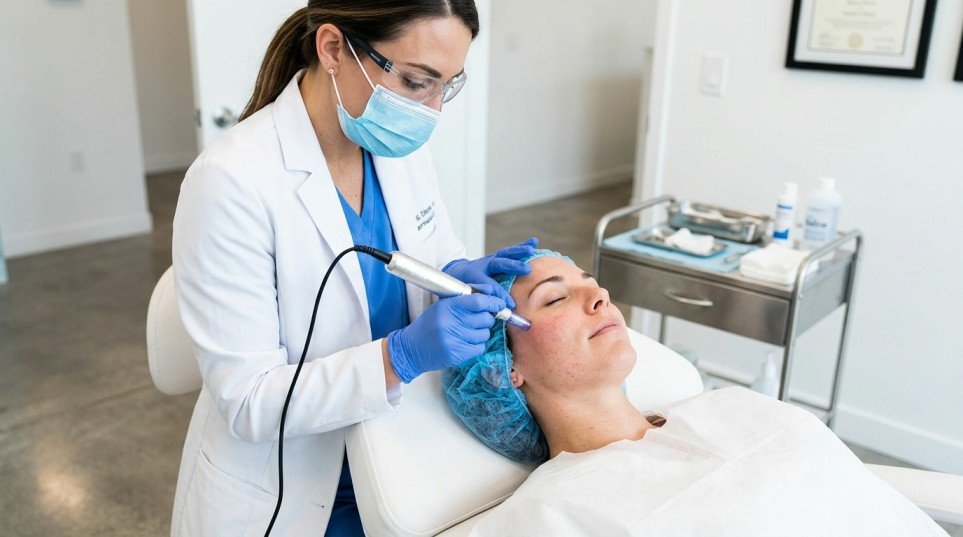
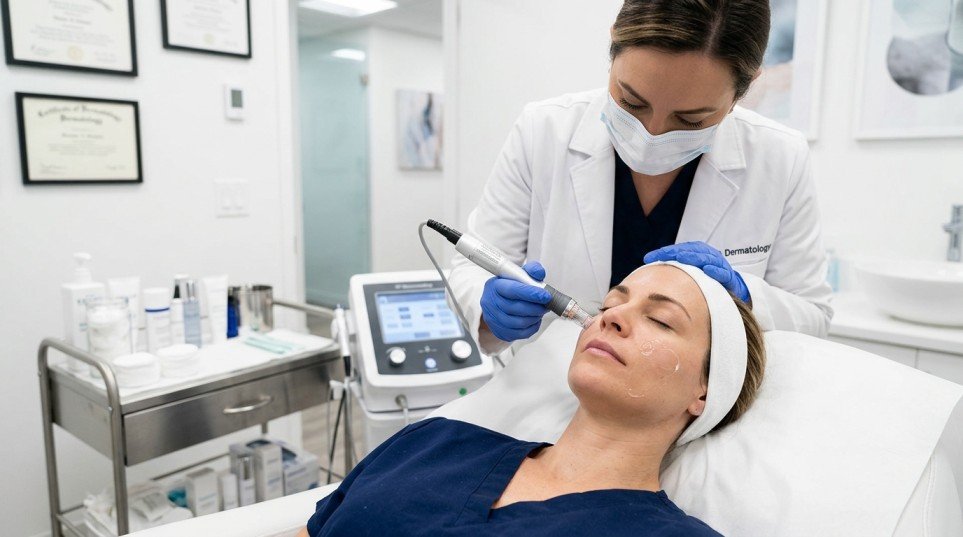
Every aesthetic procedure that improves your skin, whether through controlled micro-injury, thermal energy, or chemical exfoliation, does so by intentionally disrupting your skin's outer layers. This disruption is what triggers the regenerative response that delivers results. However, it also temporarily strips away your natural sun defenses.
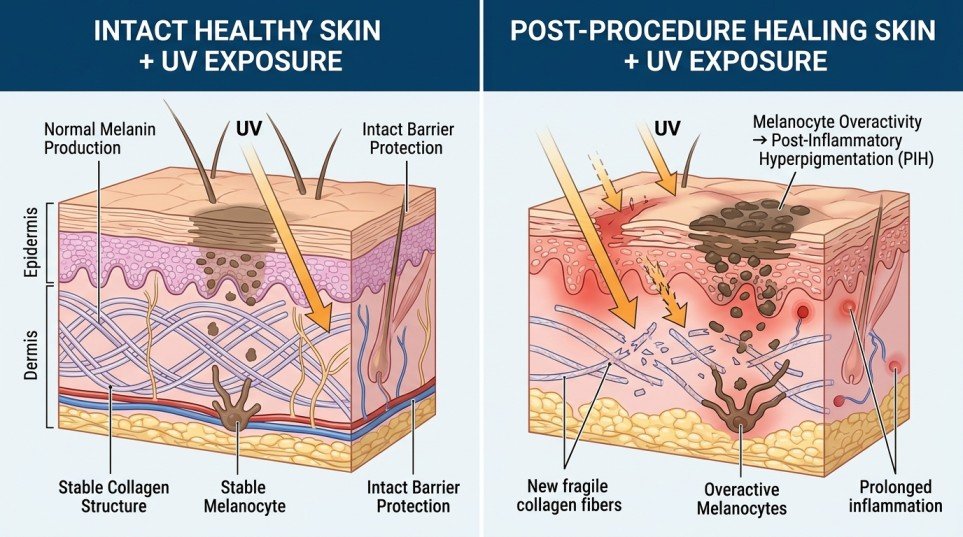
Your stratum corneum, the outermost barrier that normally provides a degree of UV protection, is compromised or partially removed. The fresh skin cells emerging during recovery lack the mature melanin distribution of established skin, making them significantly more photosensitive. Transepidermal water loss is elevated, leaving skin dehydrated and less resilient. Inflammation is active as part of the healing cascade, and UV radiation amplifies inflammatory pathways that are already working overtime.
This combination creates a window of extreme vulnerability. UV rays that your skin would normally handle with minimal consequence can now penetrate deeper, trigger excessive melanin production, and interfere with the collagen remodeling process that is essential to your results. The risk is not theoretical. Post-inflammatory hyperpigmentation, where dark patches develop on healing skin exposed to UV, is one of the most common and most preventable complications after aesthetic procedures.
How UV Exposure Undermines Your Results
The damage from unprotected sun exposure after an aesthetic procedure goes beyond surface-level discoloration. UV radiation actively works against the biological processes your treatment set in motion.
Sun exposure breaks down newly forming collagen fibers. After microneedling or laser treatment, your fibroblasts are actively producing fresh collagen to improve skin texture and firmness. UV radiation degrades these fragile new fibers before they have a chance to mature and organize, directly diminishing the structural improvements you are paying for.
UV triggers melanocyte overactivity in healing skin. When UV rays hit skin that is in an inflammatory state, melanocytes can respond by producing excessive, uneven melanin. This results in hyperpigmentation that can be far more difficult to treat than the original concern that brought you to the clinic. Patients with darker skin tones face a heightened risk, but post-procedure hyperpigmentation can affect any skin type.
Sun exposure prolongs visible redness. UV-induced inflammation compounds the redness that is already present from your procedure, extending the period of visible downtime and making recovery feel longer than it needs to be.
These effects apply across all major aesthetic procedures. Whether you had microneedling, ablative or non-ablative laser resurfacing, a chemical peel, IPL, or RF microneedling, your skin's vulnerability to UV damage during recovery follows the same fundamental pattern.
Choosing the Right Sunscreen for Post-Procedure Skin
Not all sunscreens are appropriate for healing skin. The product you use matters as much as the act of applying it.
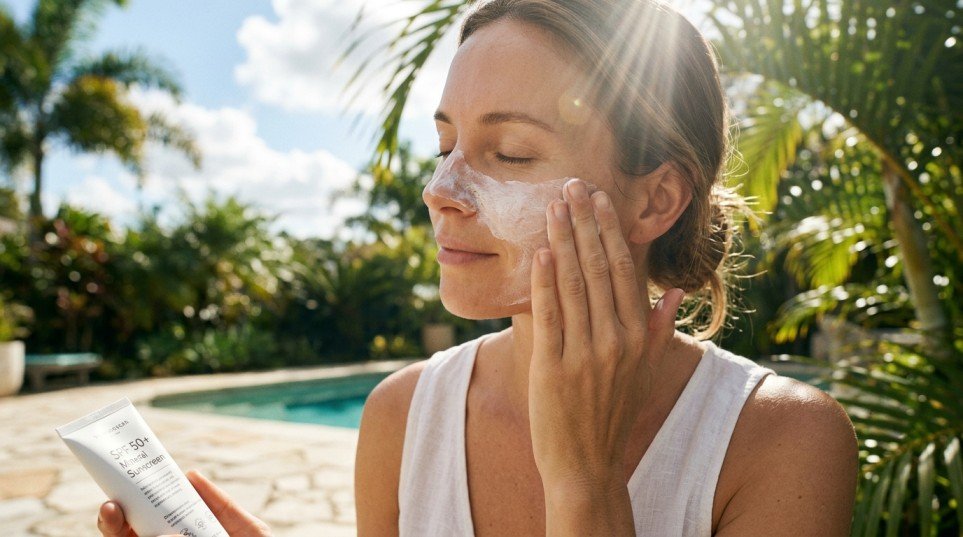
Mineral sunscreens containing zinc oxide or titanium dioxide are the preferred choice after aesthetic procedures. These ingredients work by physically sitting on the skin's surface and reflecting UV rays away, rather than absorbing them through a chemical reaction. This distinction matters because chemical sunscreen filters like oxybenzone and avobenzone absorb UV energy and convert it to heat, a process that can irritate sensitive, barrier-compromised skin and potentially worsen inflammation.
Choose a broad-spectrum mineral sunscreen rated SPF 50 or higher. Broad-spectrum protection is essential because both UVA and UVB rays pose risks to healing skin. UVB causes surface burns and redness, while UVA penetrates deeper and drives collagen breakdown and pigmentation changes.
Look for formulas that are fragrance-free, non-comedogenic, and free from common irritants like alcohol and essential oils. Some mineral sunscreens are now formulated specifically for post-procedure use with added soothing ingredients, which can be a good option during recovery.
How to Apply Sunscreen for Maximum Protection
Applying sunscreen correctly is just as important as choosing the right product. During recovery, adopt these habits to ensure your protection is actually effective.
Apply generously. Most people use far less sunscreen than needed for adequate protection. For your face and neck, use approximately a nickel-sized amount and ensure even coverage across all treated areas, including often-missed spots like the hairline, ears, and jawline.
Apply early. Put your sunscreen on as the final step of your morning skincare routine, at least fifteen minutes before any sun exposure. This gives mineral filters time to settle and form an even protective layer.
Reapply every two hours when outdoors, and immediately after sweating or patting your face with a towel. A single morning application does not provide all-day protection, even with high SPF.
Wear sunscreen indoors. This surprises many patients, but UVA rays penetrate windows. If you sit near windows at home or at work, your healing skin is still receiving UV exposure. During the first two weeks of recovery especially, daily indoor application is an important precaution.
Beyond Sunscreen: Additional Sun Protection Strategies
While sunscreen is your primary defense, layering additional protection strategies further reduces your risk during the vulnerable recovery window.
Avoid direct sunlight during peak hours, typically between 10 AM and 4 PM, as much as possible during the first two weeks after your procedure. If you must be outdoors during these hours, seek shade and minimize the duration of exposure.
Wear a wide-brimmed hat when spending time outside. A hat with at least a three-inch brim provides meaningful shade for your face, reducing the amount of UV that reaches your skin even with sunscreen in place.
Consider UV-protective clothing if your procedure involved areas beyond your face. UPF-rated fabrics provide reliable, consistent protection that does not require reapplication.
Be aware of reflective surfaces. Water, sand, concrete, and snow can reflect UV rays upward onto your face even when you are in the shade or wearing a hat. Factor this into your protection plan if you are in environments with high UV reflectivity.
Supporting Skin That Is Better Protected From Within
The strongest defense against UV-related complications combines external sun protection with aftercare that supports your skin's internal resilience. When your barrier rebuilds efficiently and inflammation resolves quickly, your skin becomes less photosensitive sooner and your results are better protected.
During days one through seven, apply Nexovia Skin Serum at 1mL in the morning and 1mL at night. The ABA.4 Aesthetic Bio-Amplifier architecture delivers plant exosomes to modulate inflammation, PDRN to activate tissue regeneration pathways, NAD+ to fuel cellular repair, and a peptide matrix to rebuild the extracellular matrix. Follow with a bland moisturizer and broad-spectrum mineral SPF 50 or higher during the day.
During days eight through fourteen, apply Nexovia at 0.5mL in the morning and 0.5mL at night as your barrier continues restoring.
After day fourteen, continue applying Nexovia once daily until the 30mL bottle is finished to support ongoing skin health and maintain results.
Choosing Aftercare That Complements Your Sun Protection
When your aftercare actively reduces inflammation and accelerates barrier repair, it works hand in hand with your sunscreen to create the most protective environment for healing skin.
This is exactly why Nexovia's Skin Serum was formulated with its ABA.4 Aesthetic Bio-Amplifier architecture. The formula combines plant exosomes at 4 billion particles per milliliter, PDRN at 1% concentration, NAD+ at 1% concentration, and a peptide matrix including growth factors. This bio-intelligent aftercare addresses recovery from multiple angles simultaneously, designed to soothe instantly, support barrier recovery, and amplify your final results.
Made in South Korea and developed specifically for the post-procedure experience, Nexovia represents the next generation of aftercare formulated to work with your skin's natural healing processes.
Nexovia Skin Serum launches in June 2026. Register for early access to be among the first to experience bio-intelligent aftercare designed specifically for post-procedure recovery.
Frequently Asked Questions
How long do I need to be strict about sun protection after an aesthetic procedure?
Most practitioners recommend rigorous sun protection for a minimum of two weeks after treatment, with many advising continued diligence for up to three months, particularly after more intensive procedures like ablative laser resurfacing or deep chemical peels. Even after visible healing completes, your skin's melanocytes can remain more reactive to UV for weeks. The safest approach is to maintain daily SPF 50 as a permanent habit, since sun protection benefits your skin long after recovery ends.
Can I get a tan after microneedling or laser treatment?
Intentional tanning, whether from sun exposure or tanning beds, should be strictly avoided during the entire recovery period and ideally for at least four weeks after your procedure. Tanning requires UV-induced melanin production, and triggering that response in healing skin dramatically increases the risk of uneven pigmentation. UV from tanning beds is particularly problematic because the intensity is concentrated and difficult to control.
Is SPF 30 enough after an aesthetic procedure?
While SPF 30 blocks approximately 97 percent of UVB rays, SPF 50 blocks about 98 percent and provides a meaningful additional margin of protection for vulnerable, healing skin. Given that post-procedure skin is significantly more photosensitive than healthy skin, the extra protection of SPF 50 is worth the small difference. Most practitioners recommend SPF 50 or higher as the standard for post-procedure recovery.
Do I really need sunscreen on cloudy days during recovery?
Up to 80 percent of UV radiation penetrates cloud cover. A cloudy day may feel safer, but your healing skin is still receiving substantial UV exposure. During recovery, apply your sunscreen every morning regardless of weather conditions. This consistency eliminates the risk of unexpected exposure on days that turn sunny or when cloud cover is thinner than it appears.
When can I switch back to my regular chemical sunscreen?
Once your skin has fully healed and your practitioner confirms your barrier has recovered, you can return to a chemical sunscreen if you prefer. For most procedures, this is typically two to four weeks post-treatment. However, if you find that mineral sunscreen works well for your skin, there is no disadvantage to continuing with it long term. Many patients find they prefer the gentleness of mineral formulas even after recovery is complete.
This content is for informational purposes only and does not constitute medical advice. Always follow the specific aftercare instructions provided by your practitioner, as recommendations may vary based on your individual treatment and skin type.